The roadmap and priorities
Choose the few AI projects worth doing, cost them, and document why they come first.

Mike joins your leadership team to decide what to build, guide the people building it, and report progress to your board—without waiting for a full-time hire.
Free 30-minute working session. Bring the decision that keeps resurfacing.
Three-time founder · Four industry firsts · Four patents · $78M+ raised · $4T+ in assets underwritten
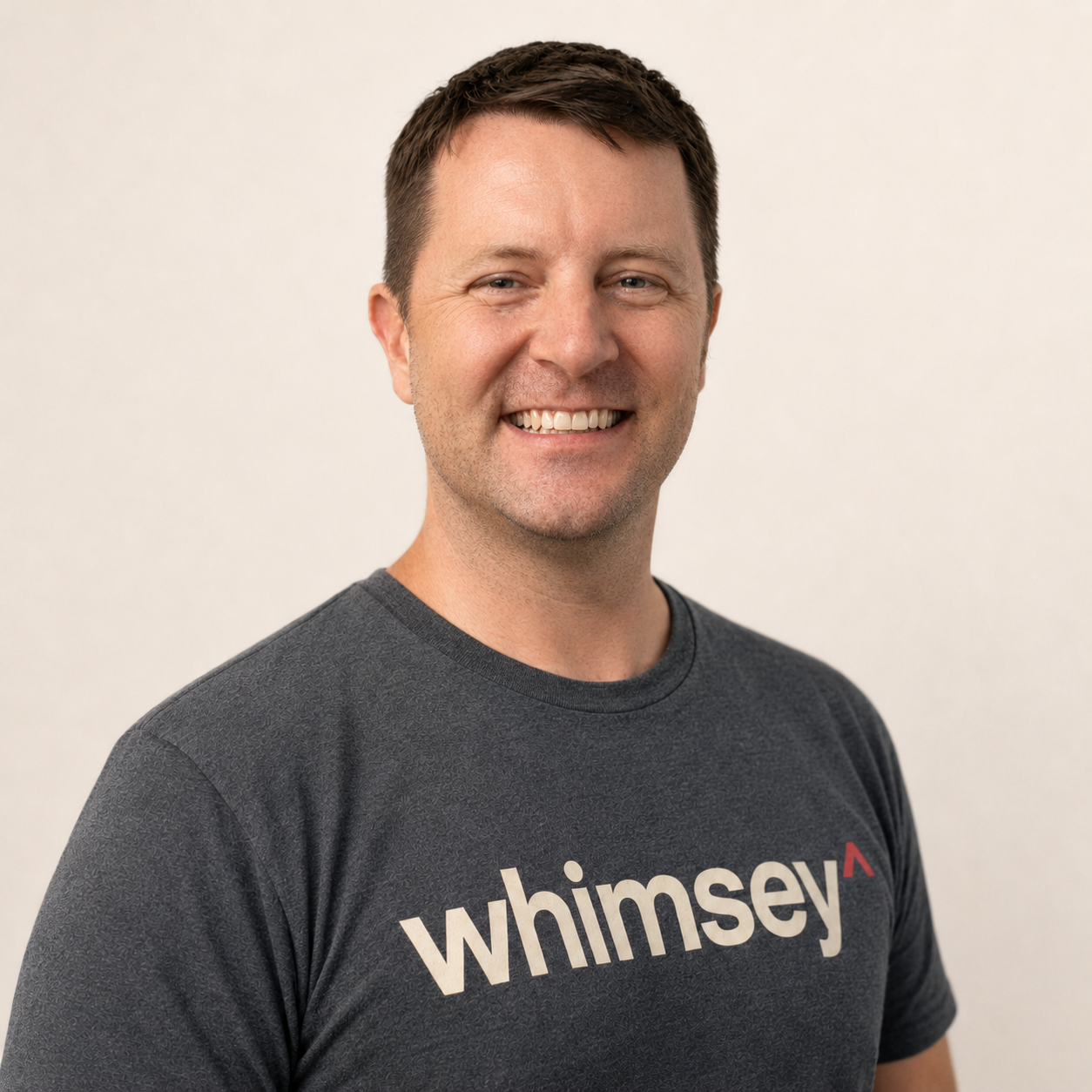
He helped build the first state-regulator-approved AI wildfire underwriting model at ZestyAI, the first generative-AI legal citator at Paxton, and the first remote solar-assessment AI at PowerScout.


^More pending. Every claim on this page links to a live public source.
Whimsey is a one-person operating practice. Mike makes decisions with your team, guides delivery, and keeps leadership informed.
Choose the few AI projects worth doing, cost them, and document why they come first.
Test vendor claims, challenge estimates, and make the call with evidence your team can review.
Turn the highest-priority idea into a working proof, then keep the build moving toward production.
Put evaluation, security, legal review, and human escalation into the work from the start.
Keep the people doing the work aligned, and help define or hire an internal AI leader when the timing is right.


Start with the business problem. The technology follows.
Search documents and data, then return answers with the sources attached.
Move a workflow from intake to result with checkpoints, evaluation, and an audit trail.
Run intake, support, and scheduling by voice, with a clear handoff to a person.
Build predictive models for underwriting, pricing, and risk.
Turn satellite and aerial images into property and location intelligence.
Scope the work, vet development teams, review estimates, and hold delivery to the plan.
Mike’s recent work spans AI startups, legal technology, insurance, climate risk, and property intelligence. The industries vary. The common thread is a consequential decision, valuable data, and a team ready to act.
Talk AI with MikeThe same method guides a focused proof of concept and an ongoing fractional leadership engagement.
Define the decision, baseline, users, available data, and what a measurable win looks like.
Name the sponsor, owner, users, technical team, and reviewers before the build starts.
Test the core assumptions with representative data and the smallest useful working system.
Put the system into real work and turn failures into the next evaluation set.
Fix what failed, add operating controls, and expand the rollout in stages.
“We brought on a fractional Chief AI Officer — the one who built the first regulator-approved AI wildfire model. He’s reviewed the roadmap, killed two projects, and prototyped the one that matters.”

Build logs, vendor teardowns, and the occasional strong opinion — written the week it happened, not polished into a case study. Free, weekly-ish.
Only if you want codebase-level recommendations. We can work from product docs, user research, and roadmap conversations alone — code access enables deeper guidance but isn’t required.
A prioritized roadmap, clear build-versus-buy decisions, a working proof of concept for the highest-priority opportunity, governance for the work, and a cadence for keeping leadership informed. Ongoing engagements also include vendor evaluation, delivery oversight, and hiring support.
Yes — the legal citator we built at Paxton lives under exactly those constraints. Engagement terms, data handling, and conflicts checks are all standard practice here, not an improvisation.
Yes. Sourcing, vetting, and managing outside development teams is part of the engagement. We write specifications, review the work, and evaluate estimates.